
As organizations across Malaysia continue evaluating alternatives to traditional virtualization platforms, many IT leaders are asking the same question:
“How do we modernize infrastructure without increasing complexity, licensing pressure, or operational risk?”
This challenge is becoming increasingly common as businesses scale their digital operations, expand virtualization workloads, and seek greater long-term flexibility in their infrastructure strategy.
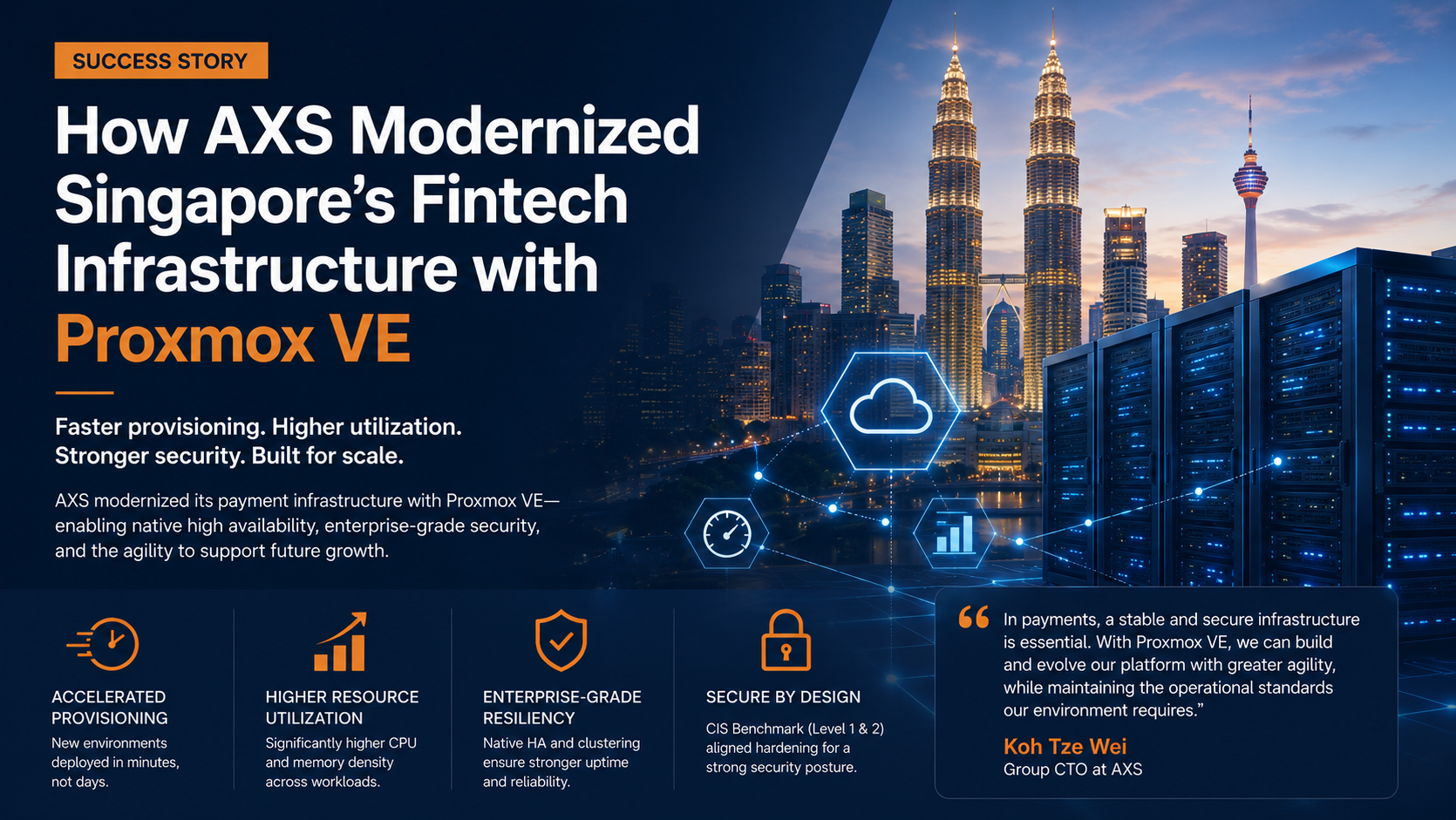
A recent infrastructure modernization project involving AXS in Singapore demonstrates how organizations are beginning to rethink virtualization architecture for the future.
While the deployment took place in Singapore, the architectural and operational challenges addressed are highly relevant to Malaysian enterprises today.
Moving Beyond Traditional Virtualization Limitations
Like many organizations that grew over time, AXS initially operated on a dedicated-server infrastructure model. While stable and reliable, the environment became increasingly difficult to scale efficiently as operational requirements evolved.
Common challenges included:
- Slower provisioning cycles
- Manual operational overhead
- Limited workload flexibility
- Inefficient hardware utilization
- Increasing demand for resilience and scalability
These are the same infrastructure concerns many Malaysian businesses are currently facing as they evaluate the future of their virtualization environments.
Why More Organizations Are Evaluating Proxmox VE
To modernize its environment, AXS adopted Proxmox Virtual Environment (VE), enabling the organization to transition toward a more agile and scalable infrastructure platform.
One of the key advantages of Proxmox VE is its ability to combine:
- Virtual machines and container management
- Native High Availability (HA)
- Cluster management
- Open architecture flexibility
- Enterprise-grade scalability
—all within a unified platform.
For many organizations across Malaysia, this approach is becoming increasingly attractive as businesses seek greater operational flexibility without introducing unnecessary licensing complexity or vendor lock-in.
Building a Future-Ready Infrastructure Platform
Together with ReadySpace, the environment was designed with a strong focus on:
- Operational resilience
- Scalability
- Security hardening
- Long-term maintainability
According to the official success story, the deployment included:
- Native High Availability (HA) cluster architecture
- CIS Benchmark–aligned hardening (Levels 1 & 2)
- Ceph-based resilient storage design
- Redundant and validated networking architecture
This approach enabled the organization to strengthen both operational readiness and infrastructure flexibility while maintaining enterprise-grade standards.
Faster Provisioning, Better Utilization, Greater Flexibility
One of the major outcomes highlighted in the deployment was the significant improvement in operational efficiency.
The implementation enabled:
- New environments to be provisioned in minutes
- Improved CPU and memory utilization
- Higher infrastructure resiliency through clustering and HA
- Reduced operational complexity through centralized management
For organizations planning future expansion, these operational improvements can have a major impact on agility, scalability, and long-term infrastructure planning.
A Growing Trend in Malaysia
Across Malaysia, more organizations are now reassessing long-term virtualization strategy due to:
- Increasing operational costs
- Greater demand for infrastructure flexibility
- The need for scalable private cloud architectures
- Concerns around vendor dependency and licensing sustainability
Rather than simply replacing hypervisors, many businesses are now focusing on building platforms that are:
- Easier to scale
- More resilient
- Operationally efficient
- Future-ready
The AXS modernization journey reflects this broader regional trend.
Infrastructure Modernization Is No Longer Just About Virtualization
Modern infrastructure strategy is no longer only about consolidating workloads.
Organizations are increasingly looking for platforms that can support:
- Long-term scalability
- Hybrid and private cloud models
- Faster deployment cycles
- Security and governance requirements
- Operational simplicity
As highlighted in the success story, infrastructure is increasingly viewed as a strategic business enabler rather than just a technical platform.
Exploring VMware Alternatives in Malaysia
For organizations in Malaysia currently evaluating VMware alternatives or planning virtualization modernization initiatives, the key consideration is no longer simply cost.
The bigger question is:
“What infrastructure foundation will best support the organization over the next 5–10 years?”
At ReadySpace, we work with organizations across Asia on:
- Proxmox VE architecture design
- VMware-to-Proxmox migration planning
- High Availability cluster deployments
- Ceph storage architecture
- Security hardening and operational best practices
As more enterprises modernize their infrastructure strategy, we expect the shift toward open, scalable, and resilient virtualization platforms to continue accelerating across the region.
Learn More
Read the original success story here:
AXS modernizes payment infrastructure with Proxmox VE
Or arrange a Proxmox Discovery Session with ReadySpace:
ReadySpace Proxmox Discovery Session
Comments are closed.